A workshop held at Loro Parque Fundación by the Macaronesia Species Survival Centre, together with Canary Islands universities and the CanBio project, confirms the need to strengthen protection measures
Loro Parque Fundación once again positions itself at the forefront of scientific conservation by promoting and hosting an international workshop to reassess the conservation status of endemic Canary Islands arthropods. The meeting organised thanks to the work of the Macaronesia Species Survival Centre, in collaboration with local universities and the CanBio project, has confirmed that all analysed species continue to be considered threatened and require priority attention.
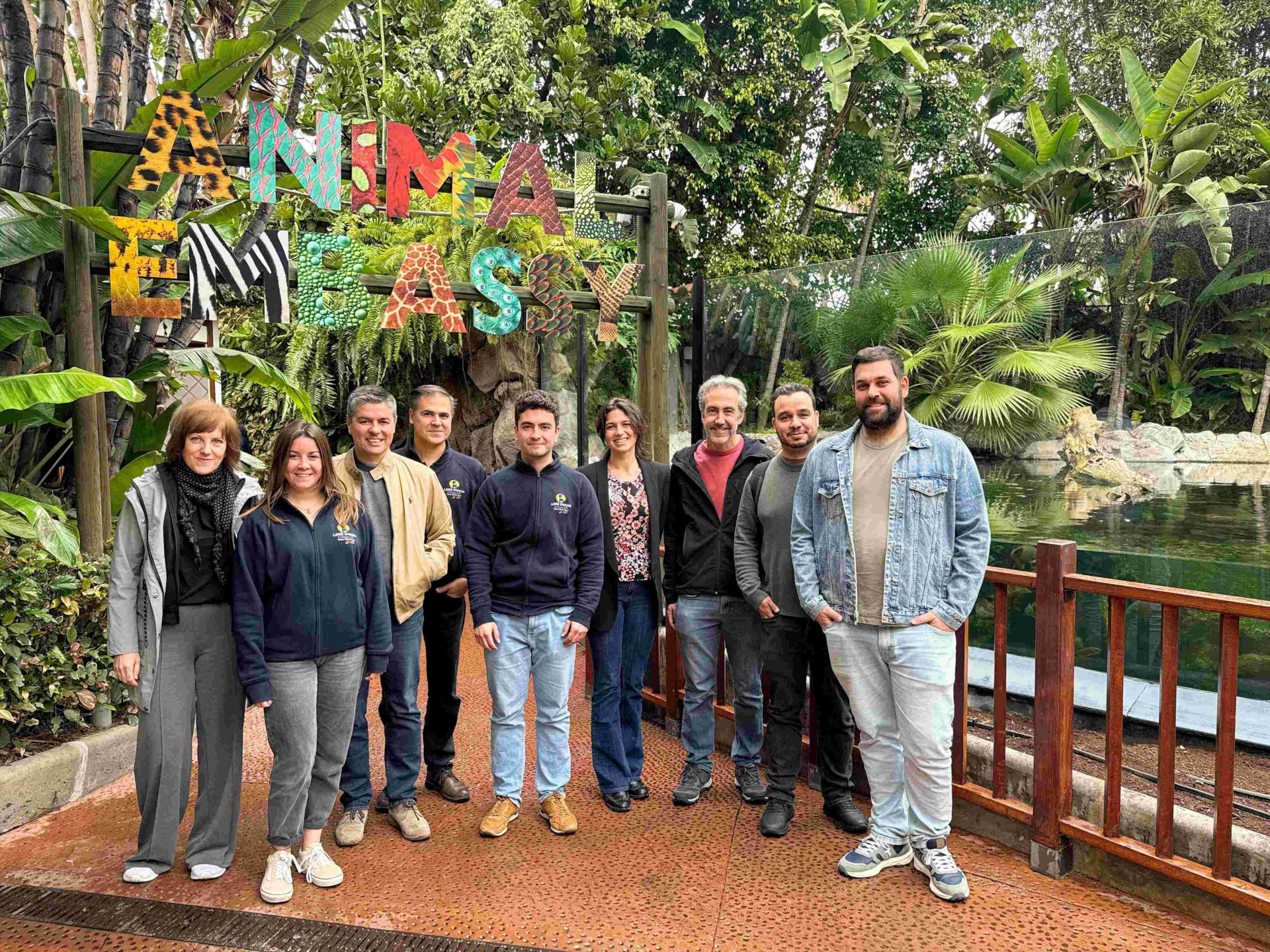
The workshop, held on 12, 13 and 14 January at the facilities of Loro Parque Fundación, brought together leading specialists from national and international universities and research centres, as well as experts linked to the International Union for Conservation of Nature (IUCN).
During the meeting, 16 species of endemic arthropods were reassessed, including flies, grasshoppers and beetles found exclusively in the archipelago. Following the analysis of recent scientific data and the exchange of expert knowledge, participants concluded that all species remain within threatened categories. However, the updated assessments allow for a more accurate understanding of the actual level of risk and more effective targeting of the necessary protection measures.
This scientific work is supported by research carried out within the framework of the CanBIO project, co-funded equally by the Canary Islands Government and the Loro Parque Fundación, with a total investment of €4.5 million until 2027. Thanks to the data generated by the research teams, it has been possible to update key information on the distribution, population size and threats to some species that had not been evaluated for more than two decades.
The president of the Loro Parque Foundation, Christoph Kiessling, stressed that ‘effective conservation always begins with rigorous knowledge. Supporting and promoting this type of scientific meeting is essential to better understand our unique biodiversity and to ensure that conservation decisions are based on solid, up-to-date evidence.’
For his part, Carlos Ruiz, researcher and scientific coordinator of the CanBio project, emphasised the relevance of this process, stating that “grounding decisions in scientific data is fundamental. This work allows us to make better decisions for the future and advance in the proper management and safeguarding of ecosystems.‘ He also warned that ’the results highlight the critical situation of a significant part of the Canary Islands’ terrestrial biodiversity and reinforce the role of scientific research as an essential tool for the conservation of natural heritage.”
Experts agree that, although some species have changed category following the reassessment, these adjustments do not necessarily imply an improvement in their situation, but rather a more accurate evaluation based on updated scientific evidence. In fact, several species have seen their threat level increase, confirming the fragility of a significant part of the Canary Islands’ terrestrial biodiversity.
Beyond their high ecological value, arthropods perform essential functions in maintaining ecosystem balance, including pollination, decomposition of organic matter and maintenance of food chains, making their conservation a strategic priority for island territories such as the Canary Islands.
In the coming weeks, the results of the workshop will be reviewed and consolidated before being incorporated into the official IUCN system, a preliminary step prior to their publication in the next update of the Red List, a key tool for prioritising conservation actions on a global scale.
Through initiatives such as this, Loro Parque Fundación and the IUCN Macaronesia Species Survival Centre reinforce their role as international leaders in conservation, applied science and biodiversity protection, actively contributing to safeguarding the unique natural heritage of the Canary Islands for future generations.