The JANTO project, co-funded by the European Regional Development Fund (ERDF), will study the genetics and status of the island populations to lay the foundations for their recovery.
The initiative includes the genetic characterisation of this species, captive breeding programmes, restocking and public engagement initiatives to protect the archipelago’s marine ecosystems.
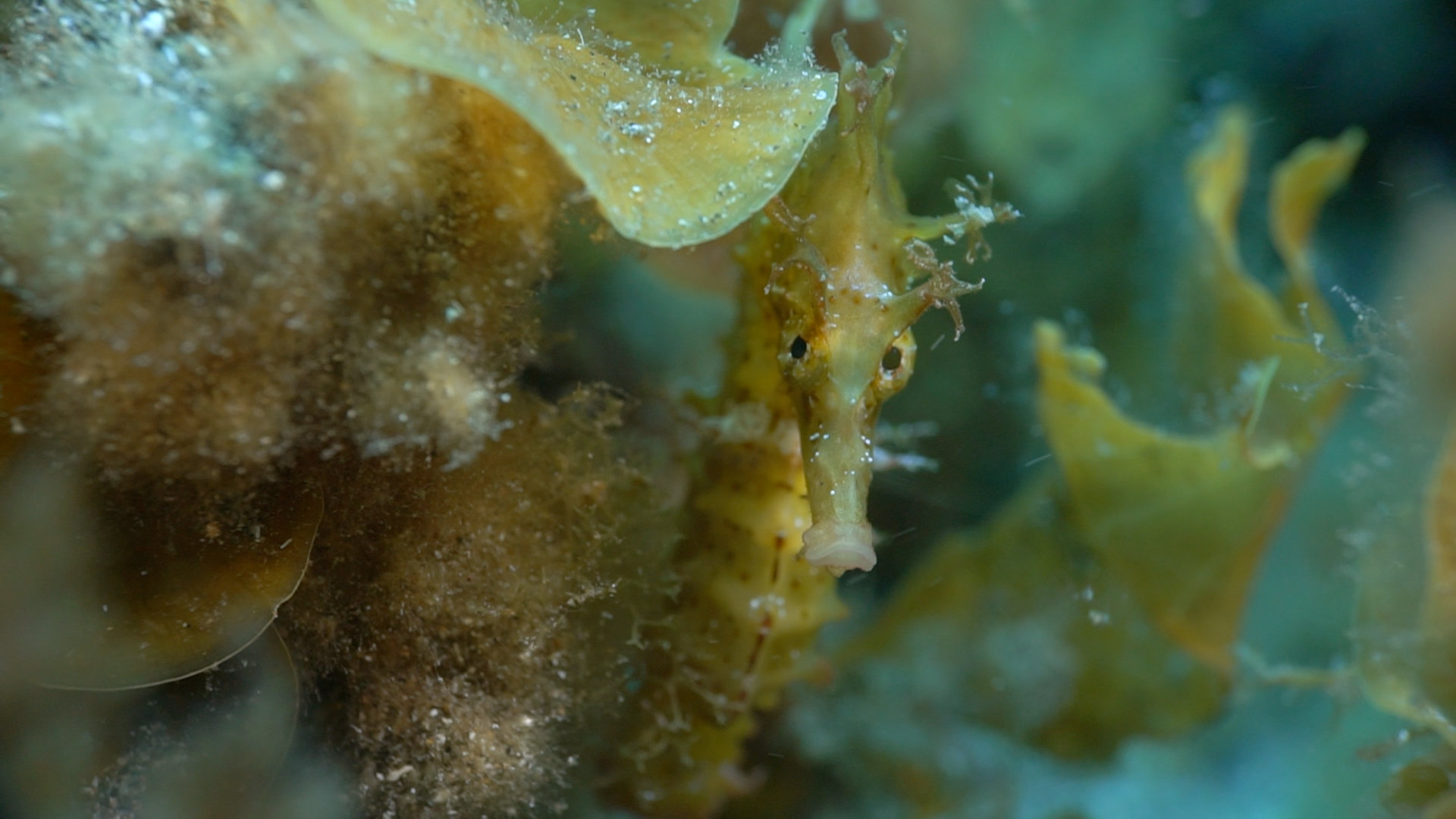
The common seahorse (Hippocampus hippocampus) is one of the most unique and fragile species in marine ecosystems and could find a new opportunity along the Canary Islands’ coastline thanks to the JANTO project, promoted by the Loro Parque Foundation and the University of Las Palmas de Gran Canaria (ULPGC).
JANTO is supported by Fundación Biodiversidad of the Ministry for Ecological Transition and the Demographic Challenge (MITECO), through co-financing from the European Regional Development Fund (ERDF). The initiative aims to generate the scientific knowledge necessary to conserve and recover populations of this species in the archipelago.
In recent decades, seahorse populations have experienced a significant decline globally due to the degradation of coastal habitats, pollution, human pressure and climate change. In the Canary Islands, moreover, there is still a significant lack of up-to-date scientific information on the status of their populations, which hinders the development of effective conservation strategies.
To address this challenge, the JANTO project will develop a multidisciplinary approach combining population genetics, ecological reinforcement, captive breeding and public engagement.
A comprehensive approach to the recovery of the species
The JANTO project’s work plan is structured around three main complementary lines of action. Firstly, a genetic survey of the archipelago will be carried out through sampling campaigns on different islands. This ‘ ’ analysis will enable the study of the seahorse’s genetic diversity and population structure, providing key information for understanding its distribution and ensuring that future conservation actions preserve its genetic variability.
In parallel, the project will implement specific protocols for breeding under human care at the Poema del Mar facilities. The aim is to establish a viable system for producing genetically suitable individuals, which can be used in population reinforcement programmes and contribute to the recovery of the species in its natural environment.
Based on the results obtained from both lines of work, the initiative envisages the launch of a pilot restocking scheme on the island of Gran Canaria. The selected specimens will be released into suitable habitats and subsequently monitored using various techniques and underwater visual surveys, which will enable the effectiveness of the implemented actions to be assessed.
Beyond its scientific dimension, the project incorporates a significant environmental awareness component. Through workshops, educational materials and outreach activities aimed at fishermen, divers, educational centres and the general public, the aim is to encourage public involvement in the protection of marine ecosystems.
With an expected duration of around two and a half years, the JANTO project aims to generate key knowledge for the conservation of seahorses in the Canary Islands, as well as to establish a model for the restoration of marine populations that can be replicated in other parts of the world.