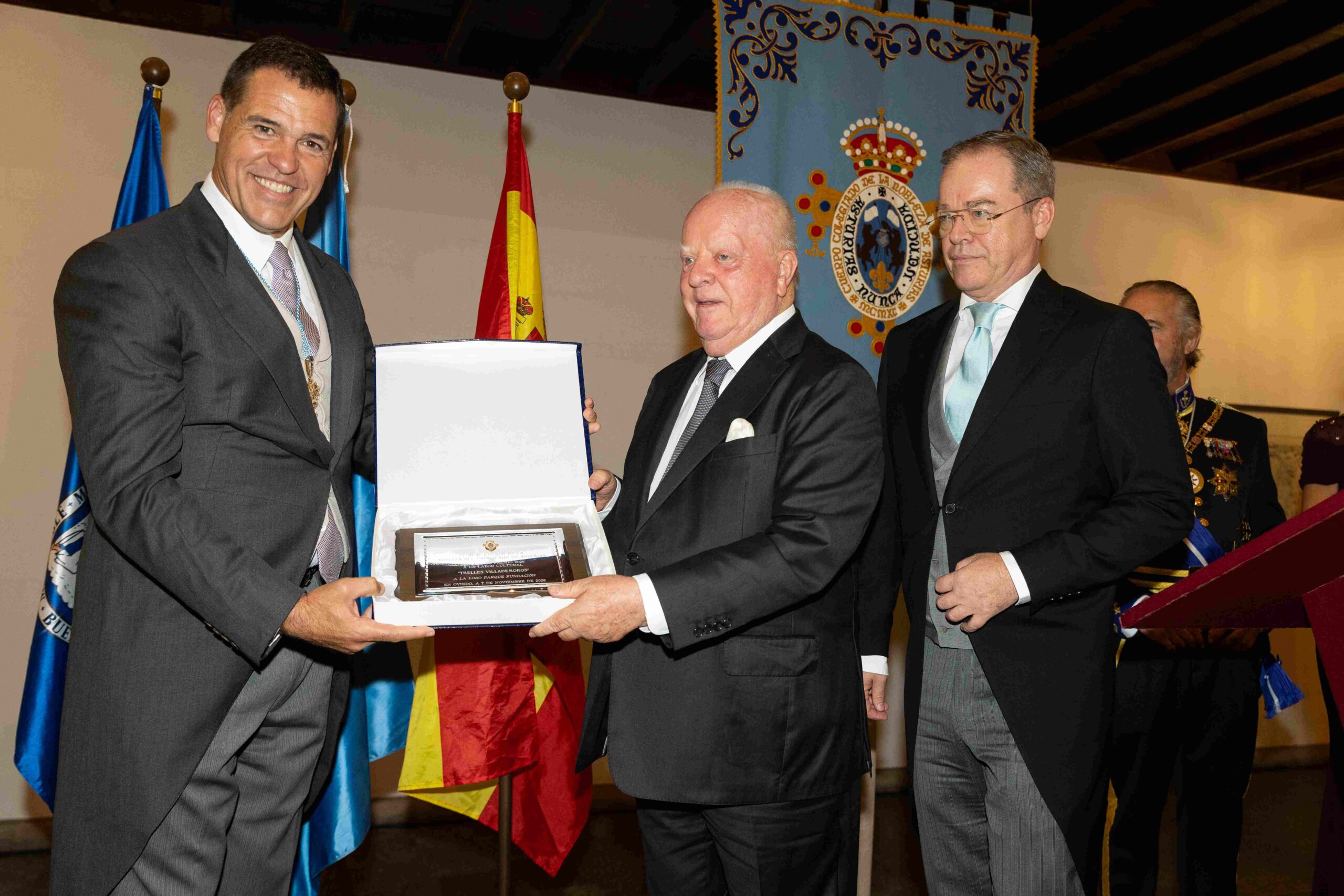
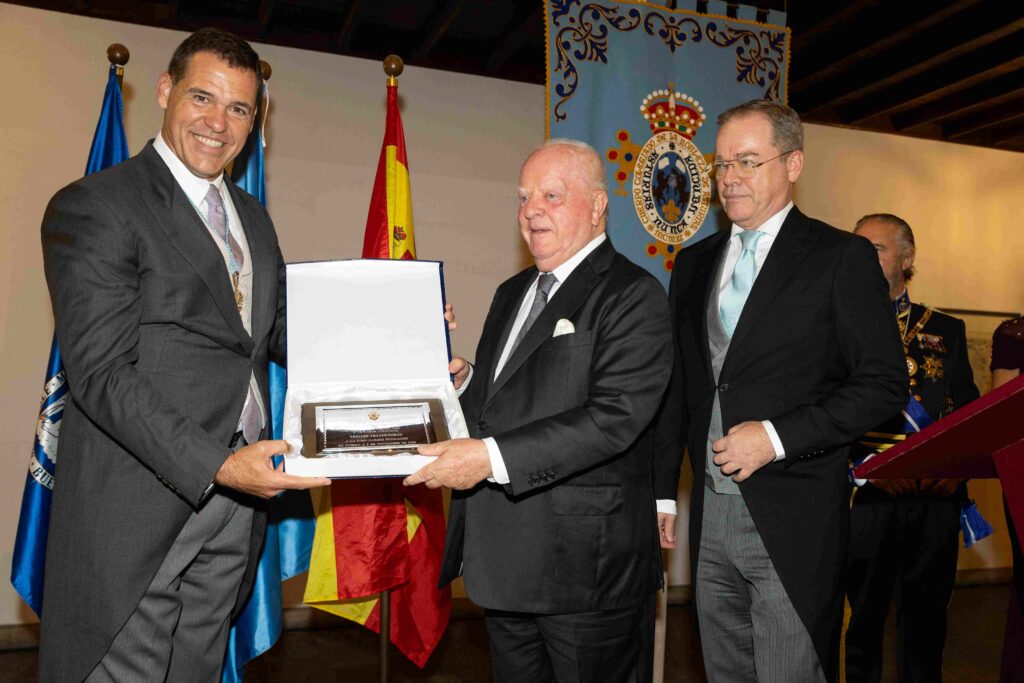
Wolfgang and Christoph Kiessling collected the prestigious 2026 Trelles-Villademoros Award in Oviedo, which recognises more than three decades of commitment to biodiversity conservation and the protection of the planet’s natural heritage.
The Loro Parque Foundation has been awarded the 2026 Trelles-Villademoros Prize for Cultural Achievement, conferred by the Royal Corps of the Nobility of the Principality of Asturias, in recognition of its extraordinary international track record in biodiversity conservation and its contribution to preventing the extinction of 18 critically endangered animal species.
The award, one of four honours bestowed annually by this historic body, recognises more than thirty years of work by an institution founded in Tenerife that has become an international benchmark in species protection, scientific research and environmental education.
The award was accepted by Wolfgang Kiessling, founder and president of Loro Parque, alongside his son Christoph Kiessling, president of the Loro Parque Foundation, during a ceremony held on 7 November in Oviedo, as part of the General Chapter of the Royal Corps of the Nobility of the Principality of Asturias.
The event, presided over by HRH Don Luis Alfonso de Borbón, Duke of Anjou and senior councillor of the corporation, brought together more than 250 attendees, including civil, diplomatic and military authorities, as well as representatives from institutions and noble corporations from across Spain. The proceedings began in the Chapel of the Chaste King within Oviedo Cathedral and culminated in a gala dinner at the iconic Hotel de la Reconquista.
One of the most significant moments of the ceremony was the speech by Wolfgang Kiessling, who recalled the principles that inspired the founding of the Loro Parque Foundation in September 1994.
More than three decades ago, Kiessling spearheaded the creation of this foundation with a decisive move: donating his entire collection of parrots, thereby laying the foundations for a project that would make nature conservation one of the Loro Parque Group’s key commitments.
During his speech, Wolfgang Kiessling emphasised that the protection of biodiversity is a collective responsibility that transcends generations and borders.
“More than thirty years ago, when we spearheaded the creation of the Loro Parque Foundation, we held a very clear conviction: humankind has a responsibility to protect the extraordinary natural wealth it has inherited, and a duty to pass it on to future generations,” stated Kiessling.
He also championed the essential role of knowledge, research and raising public awareness in ensuring the survival of threatened species.
“Because conservation is also about culture, knowledge, education and the transmission of values,” emphasised Wolfgang Kiessling, highlighting the close relationship between the protection of natural heritage and the preservation of humanity’s cultural legacy.
This recognition comes at a particularly significant time for the Loro Parque Foundation, whose achievements reflect the impact of more than three decades of sustained commitment to nature.
Since its creation, the organisation has allocated 32 million dollars to more than 300 conservation projects in 56 countries, working in collaboration with 91 scientific institutions worldwide.
But, beyond the figures, its greatest achievement is having helped prevent the extinction of 18 critically endangered animal species, demonstrating that scientific research, international cooperation and direct intervention can reverse critical situations for biodiversity.
Among the most notable examples is the Lear’s macaw, an iconic species from Brazil whose recovery has benefited from the decisive involvement of the Loro Parque Foundation. The project has enabled the transfer of birds from Tenerife to their country of origin, where they have been incorporated into reintroduction and breeding programmes in the wild.
Another notable example is the yellow-eared parrot of Colombia, whose population has seen a remarkable recovery thanks to conservation initiatives developed to protect the species and its habitat.
These stories illustrate the true scope of work that goes far beyond the protection of individual animals to include the preservation of species, the recovery of threatened populations and a contribution to the balance of ecosystems of extraordinary value to the planet.
The president of the Loro Parque Foundation, Christoph Kiessling, who took over as head of the organisation in 2017, highlighted during the ceremony the international scope achieved by the project initiated by his father and the vital role played by the people and institutions that have contributed to its development.
“I dedicate this award to those who, for more than thirty years, have made the Foundation’s work possible, and to those who protect endangered species in every corner of the planet,” he said.
Christoph Kiessling emphasised that the award should be seen not only as recognition of the results achieved, but also as a responsibility to tackle the major challenges that continue to threaten global biodiversity.
“This award is not just recognition of what has been achieved, but an incentive to continue working for all that still remains to be protected,” he said.
The Trelles-Villademoros Prize, named after the historian and scholar José Manuel Trelles-Villademoros, has a distinguished history of honouring prominent individuals and institutions.
Previous recipients include the National Library of Spain, footballer Luka Modrić, the Spanish Olympic Committee, Atresmedia, Plácido Domingo and the writer Mario Vargas Llosa.
The inclusion of the Loro Parque Foundation in this list of award winners represents a significant recognition of the role played by biodiversity conservation within humanity’s shared heritage.
The award also takes on special significance as it recognises the achievements of an organisation founded in the Canary Islands that has succeeded in projecting its model of commitment to nature conservation onto the international stage.
For the Loro Parque Foundation, this award provides fresh impetus to continue developing scientific projects, promoting environmental education and working alongside researchers and institutions from around the world to ensure the survival of endangered species.
More than three decades after its inception, the project spearheaded by Wolfgang Kiessling continues to demonstrate that nature conservation is not merely an environmental responsibility, but also a commitment to the future of humanity.