Loro Parque Fundación welcomed the visit of the Ecological Transition Committee to present the project’s progress, a unique public-private collaboration model in the world together with the Canary Islands Government and the two public universities of the Canary Islands
The parliamentary visit continues the institutional support shown just a few months ago by the regional minister, Mariano H. Zapata
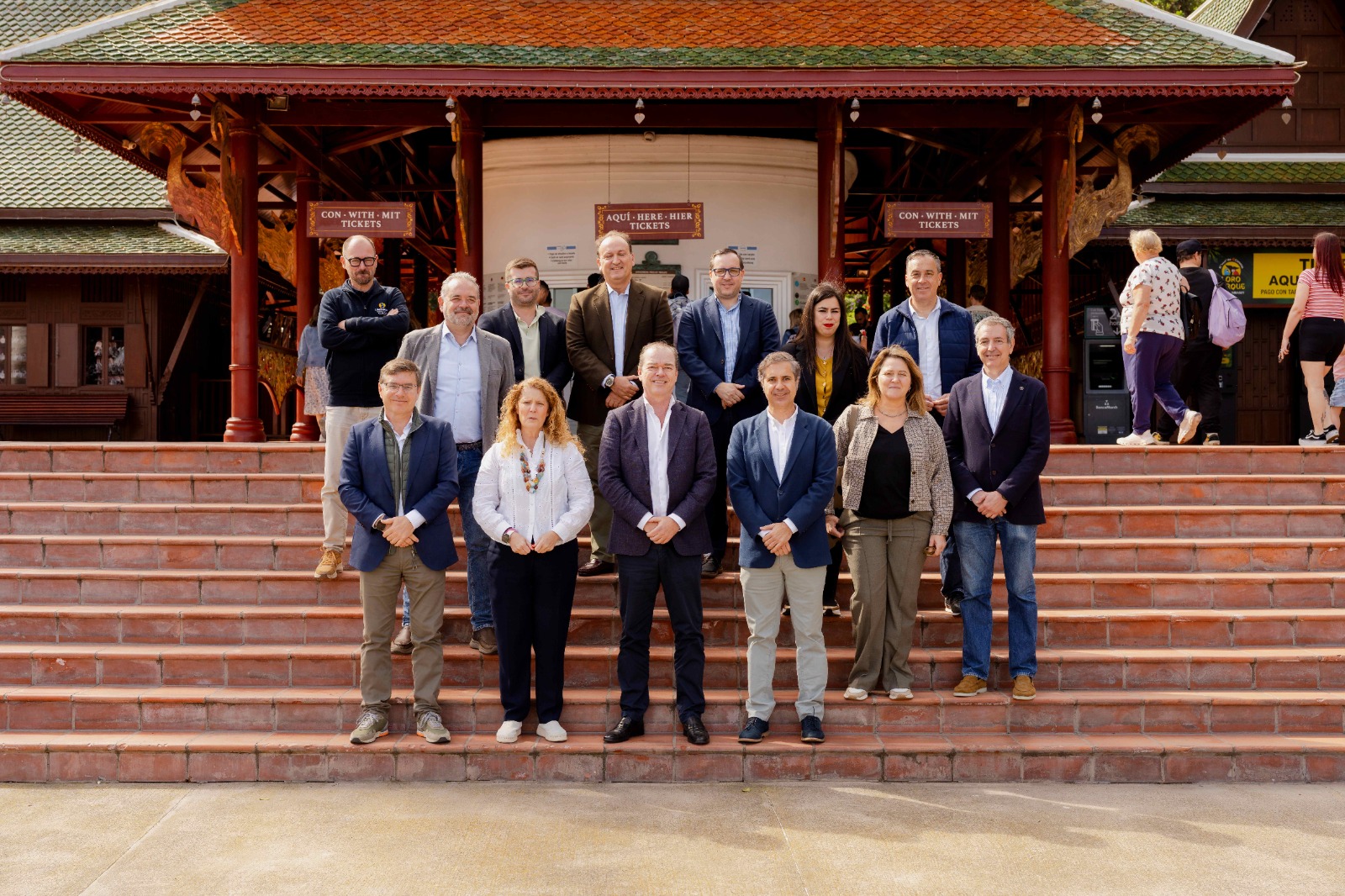
A broad representation of the Ecological Transition and Energy Committee of the Canary Islands Parliament visited the facilities of Loro Parque Fundación yesterday to learn first-hand about the progress and results of the CanBio project, a strategic public-private collaboration initiative led by Loro Parque Fundación and the Government of the Canary Islands, together with the two public universities of the Canary Islands, which has become an international benchmark in applied research on climate change and biodiversity conservation.
The visit was attended by the Chair of the Ecological Transition and Energy Committee of the Canary Islands Parliament, Jesús Ramos Chinea (ASG), MPs David Morales and Raquel Díaz (PP), Alicia Pérez (PSOE), Alicia Vanoostende (PSOE), Nicasio Galván (VOX) and Jonathan Martín (CC), who expressed institutional support for scientific research as a key tool in addressing the environmental challenges facing the archipelago.
During the visit, the parliamentarians were accompanied by the president of Loro Parque Fundación, Christoph Kiessling, the scientific director of Loro Parque Fundación, Martin Böye, and the director of Institutional Relations at Loro Parque, Ricardo Fernández de la Puente.
The project’s scientific coordinators – Javier Almunia and Fernando Rosa, researchers at the University of La Laguna; and Aridane González, researcher at the University of Las Palmas de Gran Canaria – were responsible for explaining the project’s main milestones since its launch.
CanBio has become an example of effective co-operation between public administrations, the private sector and the scientific community. The close collaboration between Loro Parque Fundación, the Government of the Canary Islands, the University of La Laguna and the University of Las Palmas de Gran Canaria has made it possible to develop a pioneering scientific monitoring network across the archipelago to study key parameters such as ocean acidification, rising sea temperatures, underwater noise pollution, and the loss of marine and terrestrial biodiversity.
The Chair of the Ecological Transition and Energy Committee of the Canary Islands Parliament, Jesús Ramos Chinea, described the visit as “very positive” and highlighted the value of this model of collaboration: “It is essential for the scientists working on the project to explain their work to us first-hand so that we can develop parliamentary initiatives. The Canary Islands can be a great laboratory for exporting knowledge to the world. We have two exceptional public universities, and Loro Parque Fundación is facilitating that transfer of knowledge, which is essential to improving species’ habitats.”
For his part, Christoph Kiessling highlighted the scale of the work carried out over the years: “After seven years of joint work with the Government of the Canary Islands and our two public universities, we have built in the Canary Islands a research and conservation model that is unique in the world. This project shows that public-private collaboration, when based on science and genuine commitment, can deliver extraordinary results in protecting our biodiversity. What we are achieving here places us at the forefront internationally, and we are proud to share it with our public representatives.”
The parliamentary visit follows the institutional support shown just a few months ago by the Canary Islands Government’s Minister for Ecological Transition and Energy, Mariano H. Zapata, who during his visit to Loro Parque Fundación highlighted that CanBio represents “a clear example of effective climate policy, based on scientific knowledge and public-private co-operation”, also underlining the importance of this initiative in designing effective adaptation measures to climate change in a particularly vulnerable territory such as the Canary Islands.
The project includes various sub-programmes focused on the recovery of threatened endemic species, the monitoring of marine and terrestrial fauna, and the generation of useful scientific knowledge to support public decision-making.
The meeting also served to convey to parliamentarians the global impact of Loro Parque Fundación, which has allocated more than 30 million US dollars to over 300 conservation projects worldwide, helping to save 18 animal species from extinction and significantly strengthening the protection of Canary Islands biodiversity.
The Parliament’s visit reinforces the institutional consensus around a project that positions the Canary Islands as a leading natural laboratory for conservation, climate research and the protection of threatened species.