

| Category | Terrestrial |
| Date | 2023 |
| Investment | 15.000,00 $ |
The Cape Parrot is one of the world’s most endangered parrots. With less than 2000 left in the wild, conservation action is crucial to ensuring South Africa’s only endemic parrot continues to exist in the wild. For this reason, LPF has been working for the conservation and study of this South African parrot species.
Back
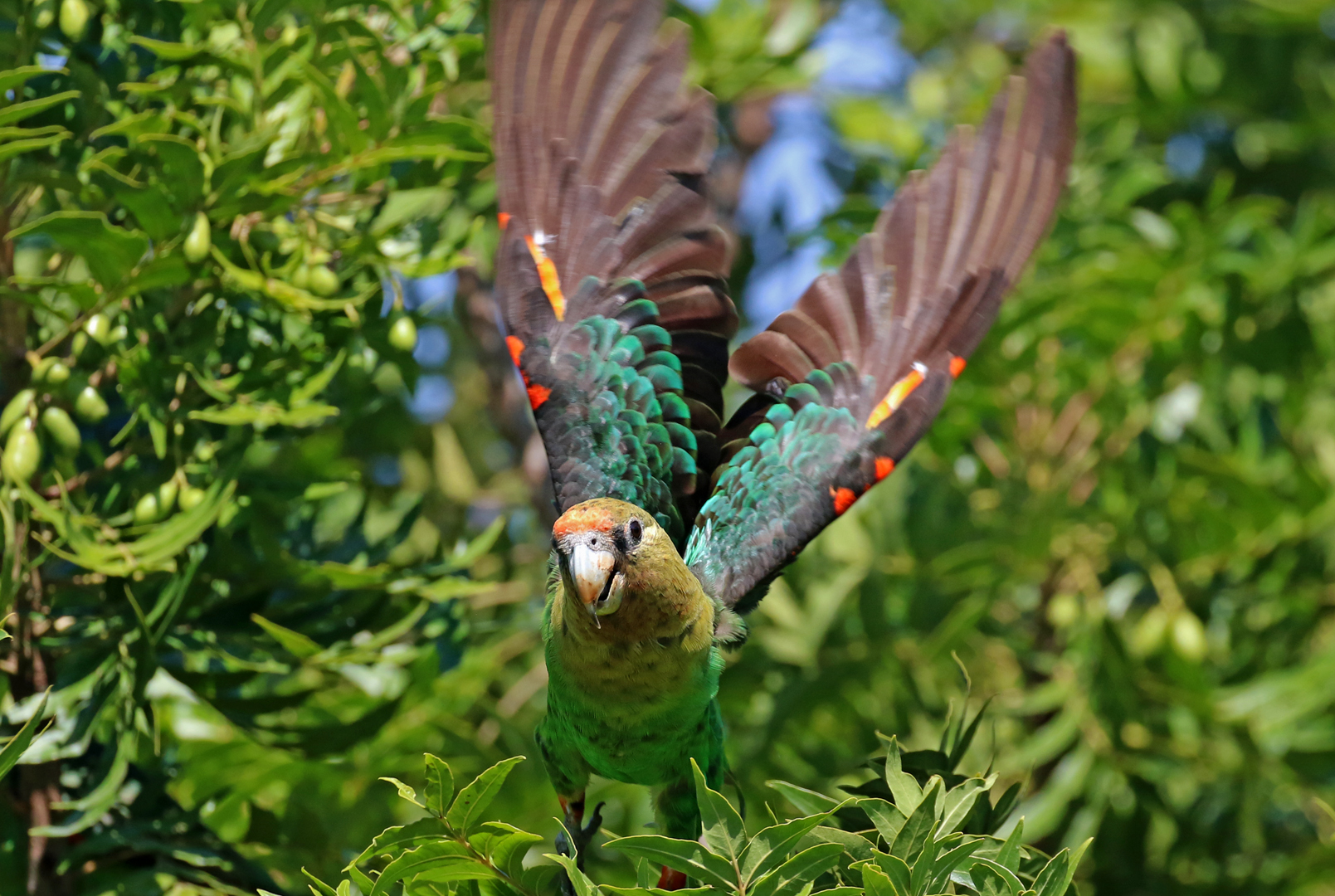
Cape Parrot, South Africa
The Cape Parrot Project is dedicated to conserving the critically endangered Cape Parrot and indigenous forests in South Africa. We collaborate with local communities to restore forest habitats and uplift the people living close to these critical ecosystems. By connecting community, conservation efforts, and scientific research, we’re working to preserve South Africa’s rich natural heritage and ensure the survival of the Cape Parrot.
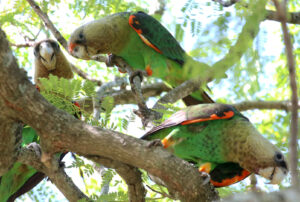
The Cape Parrot is one of the world’s most critically endangered and Africa’s most endangered parrots. Proudly green and gold, this beautiful, intelligent bird is South Africa’s only endemic parrot. With fewer than 2000 left in the wild, conservation action is crucial to ensuring their continued existence in the wild.
Equipped with a robust beak, the Cape Parrot can efficiently crack open hard nuts and fruits, especially yellowwood kernels (Podocarpus). Its appearance includes a green body and wings, a golden-olive neck and head, and distinct orange-red feathers on the ankles and wings. Adult females typically have an orange-red blaze across the crown, distinguishing them from males.
One of the main reasons the Cape Parrot has become endangered is the degradation of its main forest habitat. These birds feed and breed in Afro-temperate mistbelt forest which were severely logged from the 19th century onward. The large yellowwood trees that are their preferred breeding sites are in short supply and so focusing on forest restoration is a key part of the work of the Cape Parrot Project.
The mighty yellowwood, South Africa’s national tree, has faced significant deforestation since the late 1800s, with logging companies favouring these tall evergreens for furniture, resulting in the loss of 60% of the country’s yellowwood forests.
This rampant deforestation has had devastating repercussions for the Cape Parrot, South Africa’s only native parrot, which relies on yellowwoods for food and nesting sites.
Cape Parrots are found in isolated forest patches across Eastern Cape, Limpopo, and KwaZulu-Natal, with a smaller population in coastal regions. They nest in mature hardwood tree hollows, favouring yellowwoods. Conservation efforts aim to restore these habitats, recognizing the parrot’s dependency on intact forest ecosystems for survival.
Engaging local communities, particularly youth, is essential for forest conservation efforts. Educational programs empower children to advocate for environmental protection and support community-based nurseries involved in reforestation projects. Given the logistical challenges of conserving forested areas covering less than 1% of South Africa’s land, this community-driven approach is vital.
BLOG
News
The JANTO project, co-funded by the European Regional Development Fund (ERDF), will study the genetics…

The funds raised during the evening will support the ‘SOFIANet’ project, a strategic alliance between…
Loro Parque deeply regrets the passing of Thomas Arndt, one of the leading figures in…

Proposals can be submitted until 31 July through the Foundation’s official website Loro Parque Fundación…