
Scientific name: Rhynchopsitta terrisi
Family: Psittacidae
Kingdom: Animalia
Scientific name: Rhynchopsitta terrisi
Family: Psittacidae
Kingdom: Animalia
Scientific name: Rhynchopsitta terrisi
Family: Psittacidae
Kingdom: Animalia
The maroon-fronted parrot (Rhynchopsitta terrisi) is one of the most iconic bird species of the mountainous regions of northeastern Mexico, where it is endemic. It inhabits high-elevation coniferous forests, where it finds both food and shelter in an environment that differs markedly from the tropical habitats occupied by most parrot species.
Its reliance on these specialised montane ecosystems, combined with the ongoing loss and degradation of its habitat, has made the Maroon-fronted Parrot one of the most threatened bird species in the region.
The maroon-fronted parrot is closely associated with the montane forests it inhabits. Outside the breeding season, it typically travels in flocks that range over extensive areas in search of food, following the seasonal availability of seeds and other plant resources.
Although it spends much of its time in the forest canopy, it also relies on cliffs and rocky escarpments, which provide essential nesting sites during the breeding season. Its loud, far-carrying calls can be heard over considerable distances, particularly as flocks move between feeding and roosting areas.
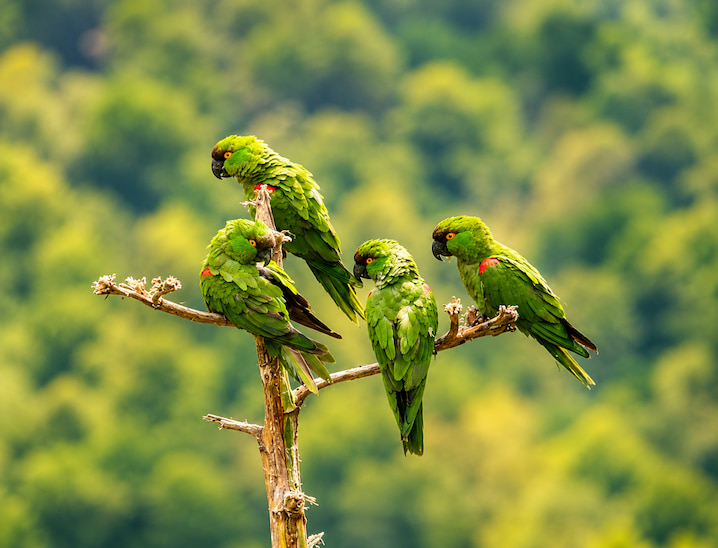
The maroon-fronted parrot can be found at elevations of over 3,000 metres (9,800 ft) above sea level—an unusually high altitude for a parrot species.
Its nests are built in cavities within steep rocky cliffs, where several breeding pairs may nest in proximity.
Much of its diet depends on the seeds produced by a variety of conifer species.
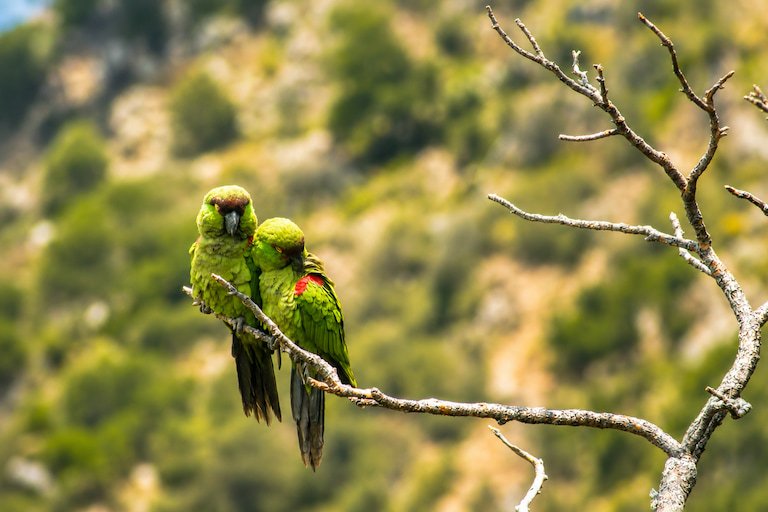
One of the most remarkable characteristics of the maroon-fronted parrot is its colonial breeding behaviour. Unlike many other parrot species that nest in isolated pairs or loosely dispersed territories, this species typically breeds in colonies, the formation of which depends largely on the seasonal availability of food.
Its nests are located in natural cavities within rocky cliffs, where breeding pairs benefit from increased protection against predators. The incubation period lasts 26 to 28 days, and both parents share the incubation duties and the care of the chicks.
Under human care, the Maroon-fronted Parrot remains a rare species, and only a small number of specialised institutions have succeeded in establishing stable breeding programmes.
The maroon-fronted parrot is a highly gregarious species that forms strong social bonds. For much of the year, it lives in flocks that move in a coordinated manner between feeding areas and breeding sites.
Vocal communication plays a crucial role in maintaining flock cohesion, particularly during flight and while foraging. During the breeding season, pairs establish themselves in nesting colonies on cliffs and rocky escarpments, where they exhibit a high degree of breeding-site fidelity, returning to the same nesting locations year after year.
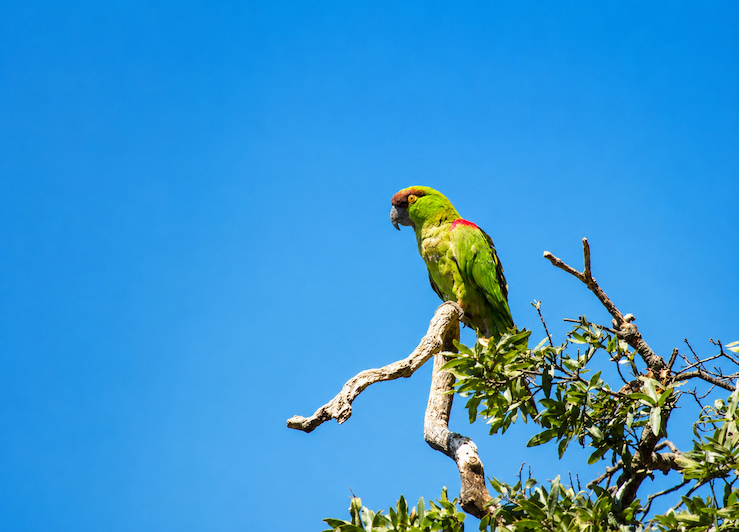
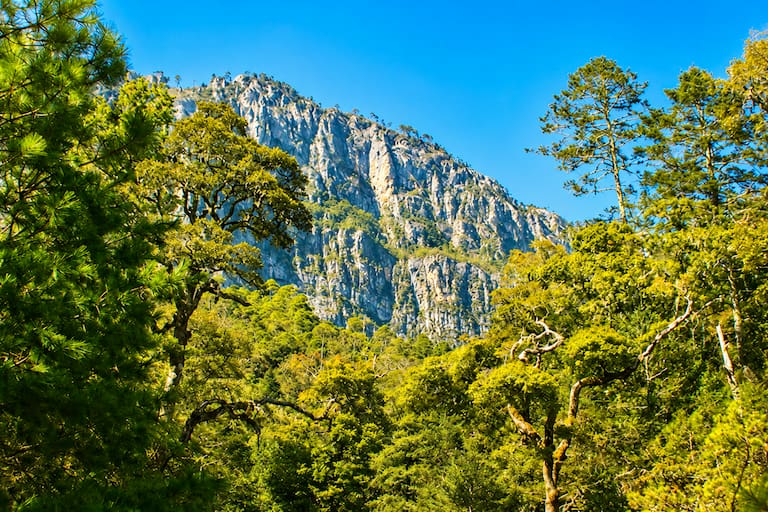
The maroon-fronted parrot is endemic to northeastern Mexico and occurs primarily in mountainous regions at elevations ranging from 1,300 to 3,700 metres (4,265–12,140 ft) above sea level.
It inhabits mature pine forests, pine–oak woodlands, and mixed conifer forests, where it feeds primarily on the seeds that form the basis of its diet. The species is also closely associated with limestone cliffs, which provide the essential nesting sites required for successful reproduction.
The conservation of these montane ecosystems is essential to ensure the long-term survival of the species.
The maroon-fronted parrot (Rhynchopsitta terrisi) is classified as Endangered on the IUCN Red List. Habitat loss and degradation, together with its relatively low reproductive rate, have led to a population decline that threatens the long-term survival of this endemic species.
To improve scientific knowledge and strengthen conservation efforts, Loro Parque Fundación supported a conservation project focused on the reproductive biology and ecological requirements of the Maroon-fronted Parrot. To date, the Foundation has invested USD 18,576 in this initiative.
The project investigated the breeding success of nesting colonies located on cliffs throughout the Sierra Madre Oriental, while also assessing how habitat characteristics influence reproductive success. To achieve this, remote camera monitoring systems were used to record the birds’ behaviour and evaluate nest success without disturbing the breeding pairs.
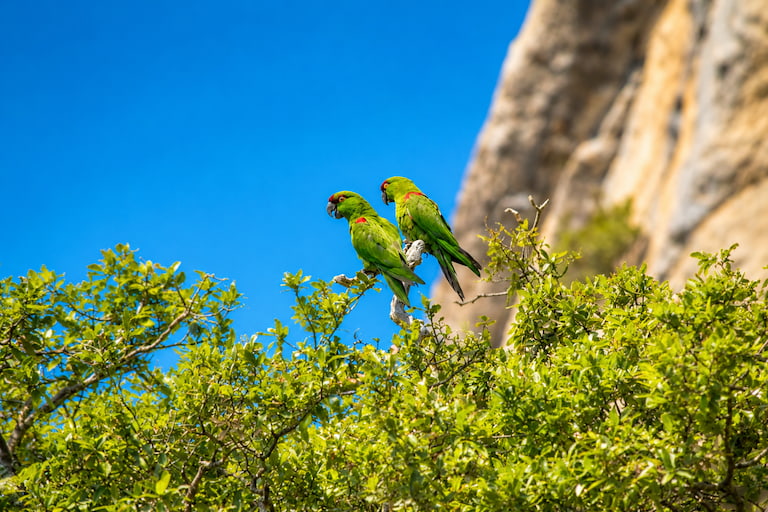
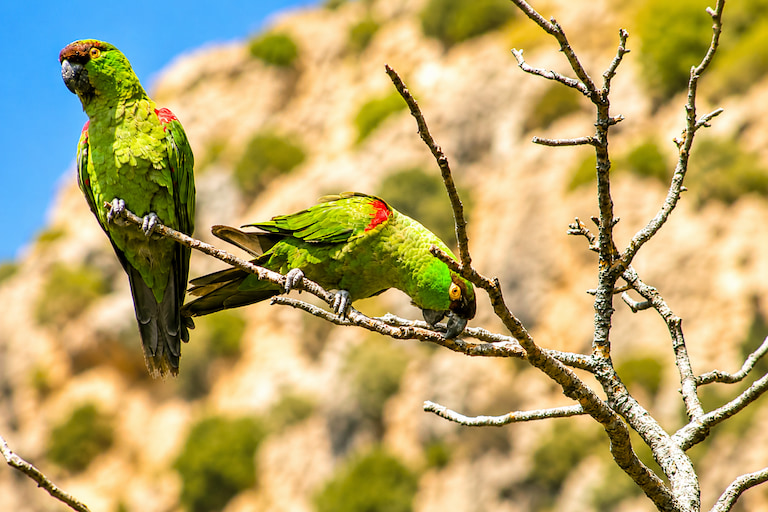
The project also identified and characterised critical feeding and roosting areas, documenting the threats affecting these key sites for the species’ survival. The resulting data help assess the effectiveness of existing protected areas and identify priority sites for future conservation efforts.
In addition, the project developed environmental education programmes aimed primarily at local communities and educational institutions, promoting awareness of this endemic parrot and the conifer forests upon which it depends.
These initiatives demonstrate the importance of applied conservation research, environmental education, and international collaboration promoted by Loro Parque Fundación to ensure the long-term conservation of this and many other threatened species.
Discover other conservation projects supported by Loro Parque Fundación.
The African grey parrot is an endangered species that inhabits Central Africa, and whose wild populations are decreasing day by day.
This species is critically endangered, with fewer than 2,000 individuals remaining in the wild. Since 2009, we have promoted several projects to help ensure its survival.
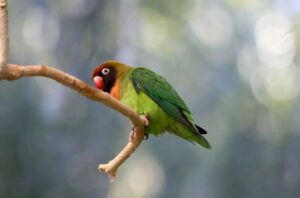
LPF has helped save the red-cheeked lovebird from extinction, a species severely threatened by illegal trade and the ongoing destruction of its habitat.
WHAT WE DO
Through our own initiatives and collaborations with partner organizations, we support research, education, responsible breeding, and conservation while working closely with local communities.
Our activities focus on protecting parrots around the world and marine species from Macaronesia.
Stay up to date on Loro Parque Fundación’s news and projects.